
Free shipping across India on orders above ₹499
It’s printed on packs of tea all over the world. At Basundhara, it isn’t a slogan. It is the one rule our pluckers follow every single day.
A tea bush keeps sending up new shoots. At the very tip of each one is a closed bud, and just below it, two young, soft leaves. That small cluster, two leaves and a bud, is where most of a tea’s flavour and aroma live.
Pick lower down and you get older, tougher leaves. They make more tea by weight, but the cup is flatter and harsher. Pick only the top and you get less tea, but a cup that tastes fresh, clean and full of character.
Less tea from every bush, but a much better cup. That is the trade we choose.
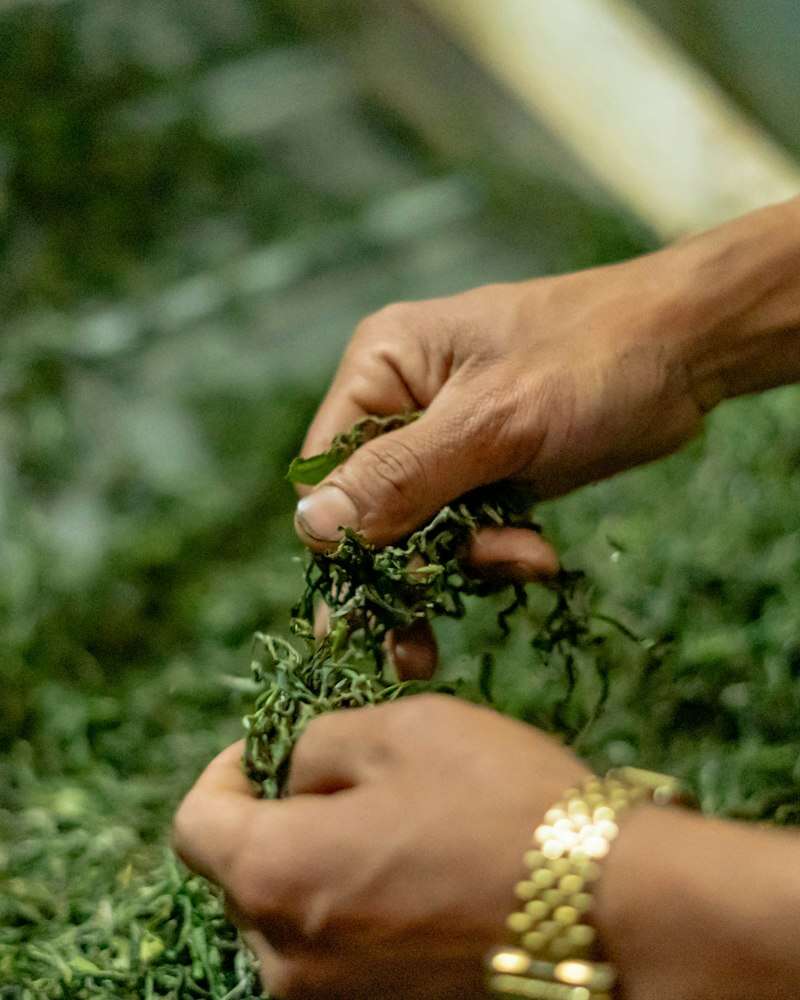
Machines cut across the whole bush and can’t tell a tender leaf from an old one. A skilled plucker can. Our pluckers learned the craft from generations of Assam’s tea communities, and they move along the rows choosing each shoot by eye and by touch.
Freshly plucked leaves start changing straight away, so we process them quickly, in small batches. Each batch gets the attention a big factory can’t give, which is why you can taste the difference.
Try this at home: brew a pinch of our Premium Orthodox Tea in a glass and watch the leaves unfurl. You will often spot whole two-leaves-and-a-bud sets opening up.
So next time you open a pack of Namsesu, you’ll know: every leaf came from the top of a shoot at Basundhara, picked by hand, and never mixed with tea from anywhere else.